Which Personalities Say “No” to the Sale Most Often?

Most sales training focuses solely on the rep. Coaching them to talk less, talk faster, handle objections, and mirror body language. However, giving sales reps a one-size-fits-all framework for interacting with clients fails to address how the buyer's personality can shape the course of the sales appointment.
In the past two decades, the four-quadrant DiSC framework, Dominance (D), Influence (I), Steadiness (S), and Conscientiousness (C), has gained traction in the sales world as a way of categorizing how people prefer to act, communicate, and make decisions.
While some sales practitioners widely claim that aligning selling style to buyer personality improves outcomes, there is little evidence that exists on which personality types sales representatives struggle to close or what conversational factors drive success across these types.
We leverage the transcript analyzing capabilities of Rilla Intelligence and a proprietary algorithm for inferring buyer personality type to answer the following key questions: Which DiSC personality types do sales representatives fail to close on most frequently?
And what conversational or behavioral factors are associated with higher closing rates when engaging the most common personality type?
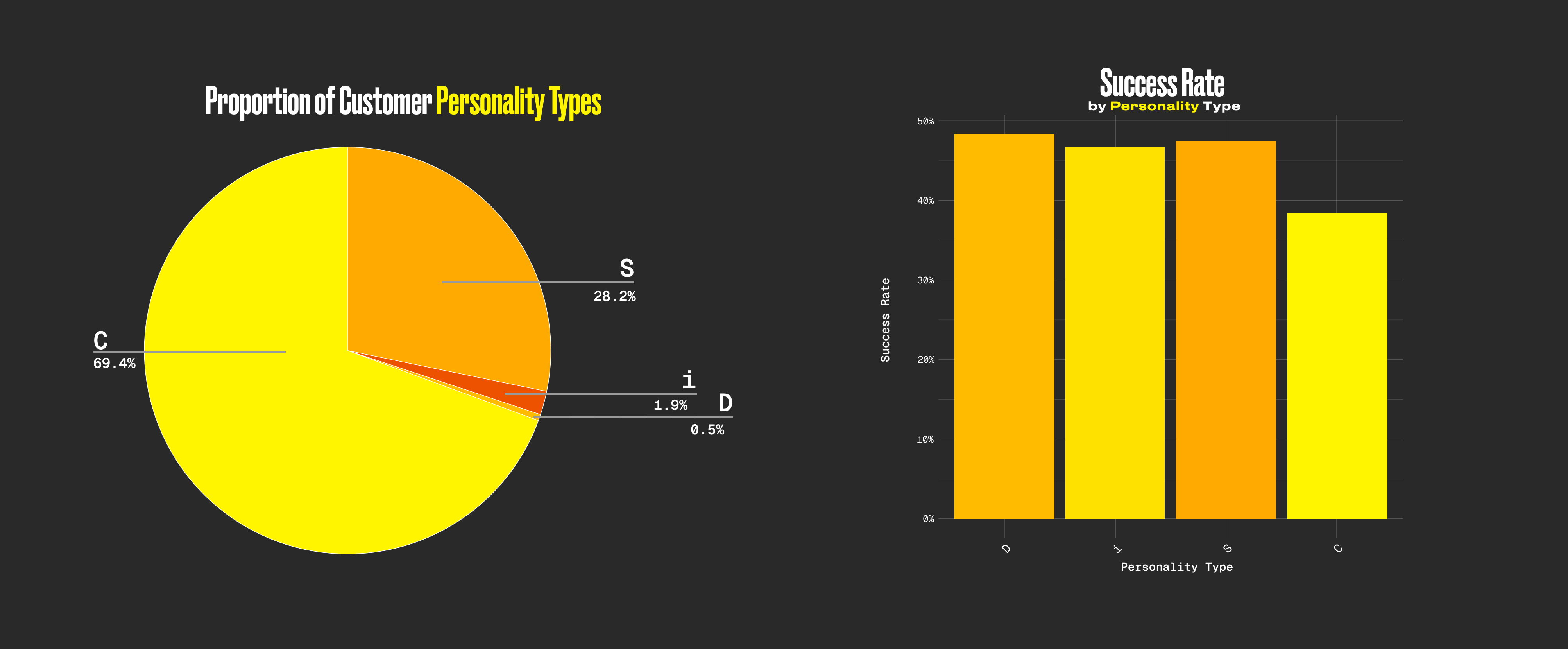
When comparing personality type to close rates, we see that buyer personality may influence sales outcomes. The most prevalent personality type of potential clients is Conscientiousness (C), making up nearly 69.4% of the total conversations analyzed. The second most common type is Steadiness (S), making up about 28.2% of the market, leaving just 1.9% and 0.5% split between Influence (I) and Dominance (D), respectively.
C-style customers make up the majority of the market and sales reps had the most difficulty closing deals with these customers, with only 38% of appointments ending in a sale, whereas appointments with the less common S-type ended in positive outcomes 47% of the time. The next step is to understand how sales representatives can improve sales performance during appointments with C-style customers, as these are the customers sales reps are most likely to interact with.
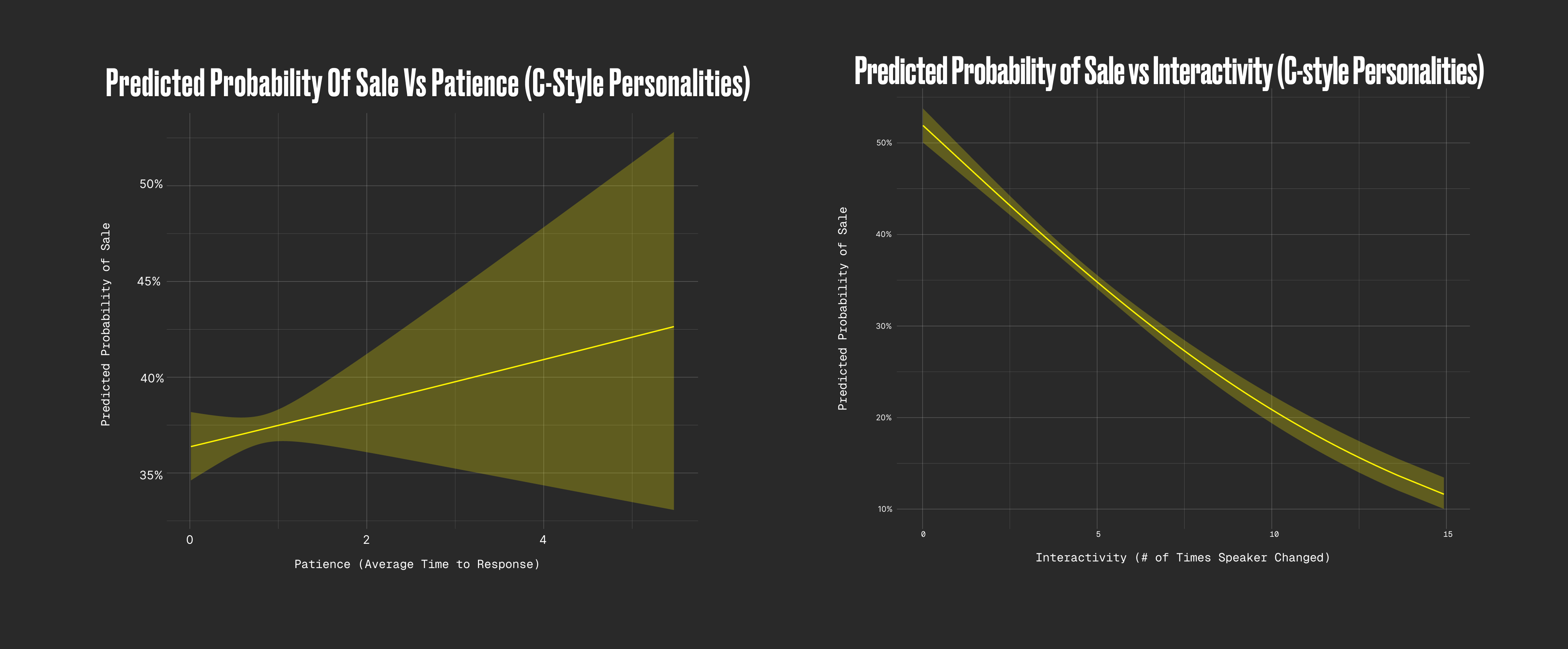
Using a statistical model, we determined that the percentage of the conversation the salesperson spoke (talk ratio), the number of times per minute the conversation switched back and forth (interactivity), how many words per minute the rep spoke (speed), and duration of the sales call (duration), were significantly important in determining the outcome of an appointment. However, the effect each variable has on the result of an appointment varies, with talk ratio and interactivity having the greatest negative impact on the appointment outcome, and patience and duration having the greatest positive impact on the outcome (Figure 2).
Takeaways for Selling to C-Style Personas
Leveraging Rilla Intelligence, we determined that Conscientiousness (C) and Steadiness (S) are the two most prevalent personality types in the market. These findings are consistent with other studies that determined C- and S-style personalities are the most commonly found personalities worldwide. We determined that talk ratio, interactivity, patience, and speed have the strongest influence on the outcome of an appointment. What does this mean for sales managers and salespeople looking to improve their sales performance?
First, sales reps can operate under the assumption that the client they are interacting with is a C-type personality, unless observational or analytical evidence suggests differently. Sales reps should be aware that C-style clients are objective and analytical thinkers, and look for sales reps who demonstrate competency and product fluency (Venkatraman, 2024; Harris-Gray, 2025).
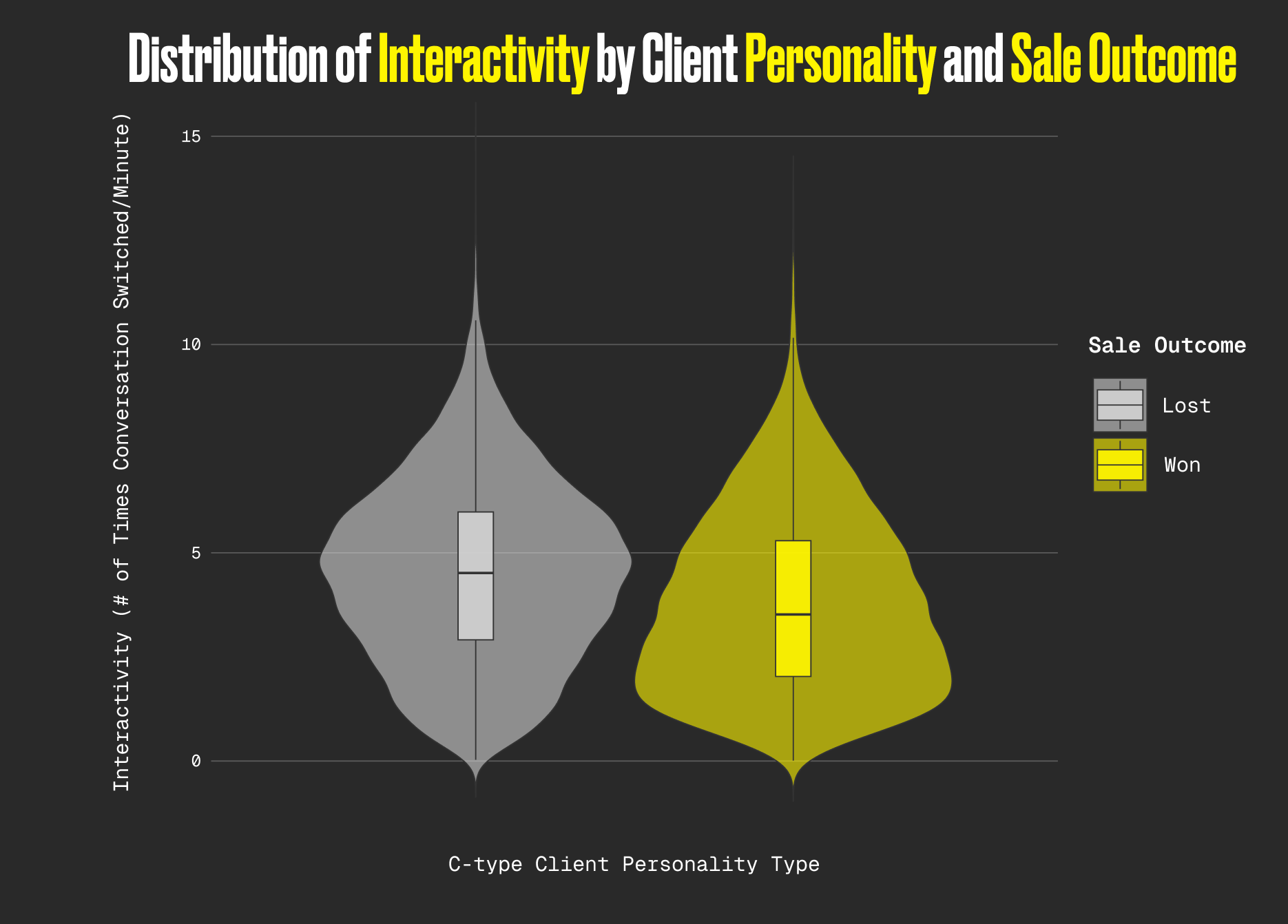
Second, high interactivity between the rep and the client can do more harm than good (Figure 3). Salespeople should limit unnecessary back-and-forth exchanges because too many conversational switches disrupt the buyer’s focus and momentum. Reps who maintain longer, cleaner stretches of explanation create a steadier flow that helps the buyer process information and make decisions more confidently.
Third, conversations should be split 50:50 sales rep to customer. The goal for reps should be to lead the conversation, but allow customers to ask questions. C-style customers want enough information to make a logical decision and will ask insightful questions to gather the information needed.
Finally, patience is key. Salespeople should take their time gathering their thoughts before responding to customer questions. Longer pauses allow reps to think about the customer, their needs, and which information will help the client make the best decision. Also, a longer pause allows salespeople to think of stats and case studies they can provide to this analytical personality type.
This study used client transcript data from across the US; therefore, patterns and trends may not hold for your area or market. We recommend conducting a similar analysis tailored to your client transcript data using Rilla Intelligence.
References
Harris-Gray, A. (2025, January 27). DiSC Customer Styles: Selling to the different personality types. DiSCProfile.com.
Venkatraman, A. (2025). How to Sell to Different Disc Personalities? Happysales.com. Happysales.
Subscribe to our Newsletter


